The post Making the case for sustainable agricultural intensification: lessons from SAIRLA appeared first on SAIRLA.
]]>
SAIRLA was a five-year, £8 million programme funded by the UK Department for International Development (DFID) that ran between 2015 and 2020. The programme aimed to provide evidence for decision makers on policies and investment that can enable women, youth and poor African smallholder farmers to participate in and benefit from Sustainable Agricultural Intensification (SAI). SAIRLA was implemented across Burkina Faso, Ethiopia, Ghana, Malawi, Tanzania and Zambia.
SAIRLA set out to achieve its aim through delivering quality research, social learning and knowledge sharing that together, could lead to behaviour change amongst decision makers on SAI. Our expectation was that this behaviour change would lead to instances of of better policy and investment design and implementation that may, over time, have a more systemic impact on policy and investment decision-making processes for SAI.
As an experimental programme, our innovative processes were marked by challenges, many unanticipated. We learned from our experience however, feeding learning back into improving the programme and sharing lessons with others to inform future programming.
What did we learn?
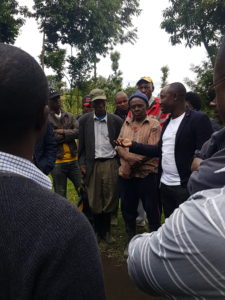
1) The social learning process was largely effective and achieved strong outcomes in some contexts.However, a more explicit objective to test a social learning approach at a national level, and to learn what works and what doesn’t, should have been stipulated during programme inception. As the programme ends, SAIRLA is assessing social learning in the programme and will generate lessons to inform similar uses of social learning in the future. A paper will be finalised by the end of April 2020 and submitted for journal publication, and a brief will also be developed for use by DFID and others involved in research and evidence uptake for policy and investment.
2) Linking research projects to National Learning Alliances (NLAs) was a creative approach that, in general, worked well to engage decision makers on evidence and inform policy and investment processes .
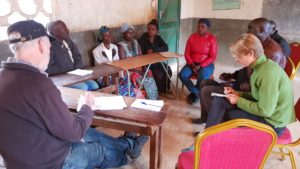
3) While SAIRLA research has the potential to inform donor and international development policies and practice, it has been potentially less relevant to specific national priorities. Likewise, while the metric of quality as being published, peer reviewed journal articles is a high priority for international donors it may not be for national decision makers. Enabling the NLAs to feed into the identification of research priorities may have resulted in a better alignment of SAIRLA’s research with current national priorities and needs. A longer inception phase could have enabled greater co-design and help to solve this problem.
4) The resources and standing of the NLA host, and the composition, skills and experience of the facilitation team are both critical to success. NLA facilitation teams need to have strong communication skills, technical leadership and facilitation skills. They also need to be plugged into decision maker networks across a range of sectors.

5) Some groups of decision makers require different approaches to engagement to maximise uptake of evidence and tools. Even though SAIRLA has informed some private sector investment, engaging businesses has been difficult due to the nature of both the NLA host organisations and the ‘usability’ and timing of the data emerging from the research projects. Senior decision makers are time poor and difficult to engage in sustained learning processes around evidence. However, targeting research evidence at mid- level decision makers, who also double as the technical/speech/report briefs writers to senior level decision makers, is likely to yield more of the desired results than targeting only the very senior policy decision makers.
6) Programmes aiming to facilitate locally led change require strong working relationships based on mutual respect, trust and co-operation. These relationships need time to establish. Joint problem identification, collaboration to develop and test solutions, and processes of learning and change also require time and space.
The post Making the case for sustainable agricultural intensification: lessons from SAIRLA appeared first on SAIRLA.
]]>The post How preparation and practice can prompt policy change appeared first on SAIRLA.
]]>
Artists, especially painters, as well as writers, for that matter, rely on a suite of techniques built up over centuries, some dating back to Greco-Roman times, to tell stories that deeply move their spectators and their readers. Contrasts of shade, perspective and foreshortening. Rhetoric, metaphor and the importance of brevity. Today, in the Internet era, as more professionals are tasked with telling their stories in a compelling way to convince potential donors and partners, they need to borrow heavily from these playbooks. However, while the tools to shape presentations and social media posts are ubiquitous and easy to use, the craft necessary to get good results is less obvious.
Economists working in development are really passionate about the truly game-changing potential of their work, and they often have pages of published research references attached to their CVs to show it. But when you ask them to put the sum of a project into a compelling 10-minute Powerpoint presentation, they often think it’s just a matter of taking a piece of research, chopping it into slabs of text, add a couple of really complicated diagrams of processes. To jazz things up a bit, they add several colors of typefaces and some arresting punctuation. We have a saying for this, and there is even a on it: Death by Powerpoint.
A series of coaching sessions was organised with the presenters to help them avoid this trap. To kick off the sessions, a note of best practices was circulated, that included not only a toolkit emphasising how to motivate a policy audience through human stories and brief, pithy messaging, but drew on the latest research on effective presentations in Powerpoint.
In the first round of drafts, by and large the participants learned the importance of ‘less is more’ using less text per slide (enriching each slide with facts, figures and anecdotes in invisible trainer’s notes instead) and keeping the format largely in the same style of typeface and layout. The messaging was clear but needed to be more compelling. However, the policy research outline was still very apparent, complete with numbering systems; compelling headlines and short, punchy text were lacking. Sentences were long and complex. Bullet points – – were abundant.
Through the training, in their second drafts they started to give more thought to visual elements, such as a consistent layout and a two-color type format, and finding ways to present text briefly without recourse to bullet points, fold in photographs of the project, and explore Powerpoint’s animation features for a dynamic fade-in.
After the Forum, the communications training identified these lessons for fashioning future presentations:
For best results, best begin weeks ahead: Policy makers are busy people, especially when getting mobilised for a major event, on top of their regular duties and field visits. But there is a common, preconceived notion that communications is the last item on the to-do list. While efforts were made to disabuse the participants of this notion, this is something to bear in mind – communications, from roughed-out messaging, to brainstorming on a moving metaphor, ideally begins weeks out for optimal outcome.
Visuals are as vital as memorable messages: For policymakers who are used to only trafficking in words, this is a real game-changer, to think through the content and ultimate objective from the vantage point of telling a story visually.
Mastering these skills means regular practice: Communications, unlike other professions, is a skill, not a theory, and only improves through constant application.
A wealth of free and professional kit awaits online, but it takes time to get adept. From world-class images at the Getty Library to infographics apps, there is a wide range of professionally-designed graphics, and stills by some of the world’s photographers, to give a presentation the polish and impact needed to change mindsets and motivate policy change. But it also takes time to reflect on the visual metaphor to illustrate and to make concrete a virtual process, such as multi-stakeholder dialogue. Again, advanced preparation is the watchword.
Feedback is fundamental:from the messages crafted to the photographs and line art selected, a presenter needs to seek out a trusted colleague who will be forthright about whether the presentation is compelling, the messages are clear, and the graphics arresting and suitable.
Revise, revise, revise :Policymakers and many experts who are not trained writers often believe that a first draft is the end of the task. But good writing is all about rewriting, with a checklist in hand, to make sure jargon, technical language, grammar and spelling errors, muddled messages and the like are excised and the language is unerringly simple, clear, and engaging.
The participants cited a few of the tips as key to their learnings: one idea per slide, less text and more arresting images, the importance of well-chosen action verbs to inject dynamism, and the tutorial on key message architecture.
This article is also available in French.
The post How preparation and practice can prompt policy change appeared first on SAIRLA.
]]>The post Créer des Powerpoints avec raffinement et style pour inciter à un changement de politique appeared first on SAIRLA.
]]>
Les artistes, en particulier les peintres, ainsi que les écrivains, s’appuient d’ailleurs fortement sur l’expertise acquise depuis l’époque gréco-romaine pour raconter des histoires qui touchent profondément leurs spectateurs et leurs lecteurs – clair-obscur, perspective, raccourci. Rhétorique, métaphore, concision. Aujourd’hui, à l’ère d’Internet, alors que de plus en plus de professionnels sont chargés de raconter leurs histoires de manière convaincante, ils doivent emprunter massivement à ces livres de lecture. Cependant, alors que les outils pour créer des présentations et des publications sur les réseaux sociaux sont omniprésents et faciles à utiliser, le métier pour en obtenir de bons résultats est peut-être plus difficile à atteindre.
Les économistes du développement sont vraiment passionnés par le potentiel vraiment révolutionnaire de leur travail, et ils ont souvent des pages de références de recherche publiées attachées à leur CV pour le montrer. Mais lorsque vous leur demandez de mettre la somme d’un projet dans une présentation PowerPoint convaincante de 10 minutes, ils pensent souvent qu’il s’agit simplement de prendre un morceau de recherche, de le couper en gros morceaux de texte, d’ajouter quelques diagrammes vraiment compliqués des processus – complet avec le format de contour de 1,2,3 et 2a, 2b, 2c dans les titres. Pour égayer un peu les choses, ils ajoutent plusieurs couleurs de caractères et une ponctuation saisissante. Nous avons un dicton pour cela, et il y a même une vidéo YouTube sur le sujet: Death by Powerpoint [en Anglais].
Pour aider ces agronomes à éviter ce piège, une série de séances de coaching a été organisée avec les présentateurs. Pour lancer les sessions, une note des meilleures pratiques a été distribuée aux participants pour examen avant de rédiger une première ébauche d’une présentation Powerpoint qui comprenait non seulement une boîte à outils des meilleures pratiques par écrit, mais aussi les dernières recherches sur les techniques pour tirer le meilleur parti du Powerpoint, en insistant sur la façon de motiver un public politique à travers des histoires humaines et des techniques de messages brefs et concis et de présentation.
Au premier tour, dans l’ensemble, les participants ont appris l’importance de “ moins c’est plus ” en utilisant moins de texte par diapositive (enrichissant chaque diapositive de faits, de chiffres et d’anecdotes dans les notes invisibles du formateur) et en gardant le format en grande partie dans le même style de police et mise en page. Le message était clair mais devait être plus convaincant. Cependant, le plan de recherche sur les politiques était encore très apparent, avec des systèmes de numérotation; il manquait des titres convaincants et un texte court et percutant. Les peines étaient longues et complexes. Les puces, un vrai non-non, étaient abondantes.
Tout au long de la formation, dans leurs deuxièmes ébauches, ils ont commencé à réfléchir davantage aux éléments visuels, tels qu’une mise en page cohérente et un format de type bicolore, et à trouver des moyens de présenter brièvement le texte sans recourir aux puces, de plier des photographies du projet et explorez les fonctionnalités d’animation de Powerpoint pour un fondu dynamique.
Après le Forum, la formation en communication a identifié ces leçons pour façonner les futures présentations:
Pour de meilleurs résultats, commencez mieux des semaines à l’avance: les décideurs sont des gens occupés, en particulier lorsqu’ils se mobilisent pour un événement majeur, en plus de leurs tâches régulières et de leurs visites sur le terrain. Mais il existe une notion commune et préconçue selon laquelle les communications sont le dernier élément de la liste des choses à faire. Bien que des efforts aient été faits pour désabuser les participants de cette notion, c’est quelque chose à garder à l’esprit – les communications, des messages grossiers aux remue-méninges sur une métaphore émouvante, commencent idéalement des semaines pour un résultat optimal.
Les visuels sont aussi vitaux que des messages mémorables: pour les décideurs qui ont l’habitude de ne faire que du trafic de mots, cela change la donne, de réfléchir au contenu et à l’objectif ultime du point de vue visuel de raconter une histoire.
La maîtrise de ces compétences signifie une pratique régulière: la communication, contrairement à d’autres professions, est une compétence, pas une théorie, et ne s’améliore que par une application constante.
Une multitude de kits gratuits et professionnels vous attendent en ligne, mais il faut du temps pour devenir adepte. Des images de classe mondiale à la Getty Library aux applications d’infographie, il existe un large éventail de graphiques conçus par des professionnels, et des images fixes par certains des photographes du monde, pour donner une présentation le poli et l’impact nécessaires pour changer les mentalités et motiver le changement de politique. Mais il faut aussi du temps pour réfléchir à la métaphore visuelle pour illustrer et concrétiser un processus virtuel, comme le dialogue multipartite. Encore une fois, la préparation avancée est le mot d’ordre.
La rétroaction est fondamentale:des messages rédigés aux photographies et dessins au trait sélectionnés, un présentateur doit rechercher un collègue de confiance qui saura clairement si la présentation est convaincante, les messages sont clairs et les graphiques saisissants et appropriés.
Réviser, réviser, réviser: les décideurs et de nombreux experts qui ne sont pas des rédacteurs qualifiés pensent souvent qu’un premier projet est la fin de la tâche. Mais une bonne écriture consiste à réécrire, avec une liste de contrôle en main, pour s’assurer que le jargon, le langage technique, les erreurs de grammaire et d’orthographe, les messages confus et autres sont excisés et que le langage est infailliblement simple, clair et engageant.
The post Créer des Powerpoints avec raffinement et style pour inciter à un changement de politique appeared first on SAIRLA.
]]>The post Remembering, retelling and reshaping stories for research engagement appeared first on SAIRLA.
]]>Picture restorers have to remove layers of patina built up over the years, to reveal the hidden masterpieces. The picture was there all the time – it just got to the point where most people couldn’t see it. For us, the process of communication training at the ILA was a very similar process.
 Researchers are great at talking. Chat to any one of them in the coffee break and you will hear animated stories of extraordinary change and progress. But ask the same people to formally present their work and a strange transformation takes place. Years of academic training kick in and instead of a clear explanation of the problem and the research, a smoke screen of jargon pours forth. So, a simple problem statement such as ‘we realised that we needed to help women in farming households access information to meet their needs’ becomes ‘systemic failure to address the information asymmetries for gender groups despite their heterogeneous financial positions and diverse value chain interactions with a variety of actors’.
To help its partners avoid the same pitfall, SAIRLA held a training session at the ILA specifically designed to encourage project teams to strip back and retell their research stories. To assist, a guidance note was prepared by a small working group the day before the event. A peer-review process was also included to remind participants of the importance of a people-centred story and to ensure that the material being presented was clear and reflected what would be interesting to a policy audience.
As a result of the peer review process, some projects flipped their presentations around and emphasised different elements of their work. A good example of this was the presentation by the Research and learning for sustainable intensification of smallholder livestock value chains (ResLeSS) project. Through the training they gave more emphasis to a game they had developed to facilitate conversations in the process of resolving land-use conflicts between farmers and pastoralists. The feedback noted this made a unique contribution and provided a story with strong human interest. As their pitch developed, the game, and its impact, were seen to be important parts of their story which supplement the core research narrative about the environmental and social impacts of changing livestock livelihoods.
Ahead of a ‘marketplace’ with Ethiopian stakeholders, the teams were also asked to think about what the invited guests needed to hear. This seemed to be successful. The guests, who included representatives from the UN, FAO, Bill and Melinda Gates Foundation and the Ethiopian Ministry of Agriculture, were able to quickly absorb what the projects had achieved.
The training received some great feedback. First of all, there was a surprise at the revelation that with good preparation, projects could distil the essence of their projects into one-minute pitches that delivered both headlines and key features. As one participant said: “We made small attractive packages from our complex stories”. Another delegate commented: “It is mind blowing what you can say in a minute”.
The process had also made the participants think differently about what they had achieved.
One of the delegates noted that the short pitches and poster sessions paid dividends when the representative of the Ethiopian Ministry of Agriculture was able to list out the ideas she felt she would be able to harvest in the future.
Another said that the training had showed them how to hook partners and force them to see the positive aspects of their own work. A researcher talked about how this process made them reflect on the amount they had achieved she also noted their new-found confidence about sharing their lessons. The Ghana National Learning Alliance saw the value of localising their research in ways that resonate with decision makers and hit people’s interests. They felt that this approach is more likely to see their research becoming useful than relying on dense reports.
SAIRLA’s Learning Alliance Lead Richard Lamboll, from the Natural Resources Institute, put his finger on the problem in his closing comments of the ILA when he noted how strong the incentives to write in such a wordy way really are. For example, there is an academic industry of peer-reviewed papers that requires this language – indeed journal papers are still considered a key output for research programmes. And researchers will get promoted on the basis of the journal papers they lead or to which they contribute.
We hope that after the training, SAIRLA’s partners have the confidence to challenge what Michael Billig, Professor of Social Sciences at Loughborough University and author of ‘Learn to Write Badly: how to succeed in the social sciences’ rather bluntly describes as and take one step closer to being multilingual enough to talk to academics, decision makers and indeed anyone with an interest in their research.
One of the delegates said: “I used to think I was writing research for publication. Now I see that I can deliver the findings of the research to create change.”
We look forward to finding out.
Clare Gorman and Duncan Sones are independent media consultants supporting the SAIRLA programme.
The post Remembering, retelling and reshaping stories for research engagement appeared first on SAIRLA.
]]>The post ILA 2019: What are the trade-offs involved in SAI pathways and choices? appeared first on SAIRLA.
]]>
During the fourth International Learning Alliance workshop in Tanzania, members from SAIRLA research projects and National Learning Alliances were invited to share their lessons and experiences and share key findings and tools.
Three research projects and one NLA presented on the theme of trade-offs under which the SAIRLA programme is exploring how the economic, social and environmental trade-offs associated with sustainable agricultural intensification (SAI) can be managed.
Here we summarise the presentations and highlight the key discussion points from the plenary that followed.
Zambia NLA: Sustainable Agriculture Intensification Trade-Offs- Case of Zambia
The Zambia NLA is facilitating stakeholders to engage with evidence and tools on SAI in Zambia. SAI has been mostly been promoted to smallholder farmers through projects such as the Conservation Agricultural project. The NLA conducted a participatory activity developed using a social learning approach to gather perspectives from various stakeholders on the synergies and trade-offs of the various SAI practices – at the village/community level with farmers, then at the district/provincial level with the private sector, CSOs, public sector and farmers. Among their findings, they discovered that:
- All stakeholders had a limited conceptualisation of SAI in relation to landscape sustainability and livelihood systems because different stakeholders and projects have chosen some components of SAI over others.
- SAI has both positive and negative influences on all trade-off domains
- Nearly all stakeholders report positive results of SAI that contradict actual practices
SITAM’s research focuses on supporting smallholder farmer’s decision making in managing the trade-offs for SAI. The presentation focused on how smallholder farmers manage the trade-offs between production, sustainability and other socioeconomic and environmental factors. The research project uses a trade-off domains model (adopted from USAID’s Sustainable Intensification Assessment Framework) that takes into consideration issues of productivity, economic, environmental, human and social factors and are mapped against the different trade-offs and management strategies as identified by farmers in each of the research focal countries (Burkina Faso, Ghana and Malawi). Emerging messages from the research include:
- Farmers manage trade-offs through a diversification of farm management and livelihood strategies
- Some unsuitable farming practices (such as burning of fields, irresponsible use of agrochemicals) need to be avoided but systems level support is needed to encourage pro-sustainable alternatives. So far, development interventions have pushed specific technologies.
The project uses the CLEANED R tool to help model the environmental impact of transforming livestock value chains. It combines open access GIS data with participatory modeling to develop a quick but ‘good enough’ context specific environmental impact assessment for decision makers.
Among the lessons the project has learned:
- In Burkino Faso: Crop farmers and pastoralists can co-exist in peace
- In Tanzania: Improved cattle fed with bran, oil seed cake and locally produced fodder will reduce pressure on land – at the cost of buying staple food from elsewhere.
- In Ethiopia: Meat and milk production can be increased without increasing the environmental impact from livestock.
The overarching goal of the project is to influence policy and practice that are expected to culminate in: uptake of contextually appropriate SAI interventions with corresponding increases in food security among small holder farmers and urban and rural consumers in Ethiopia, Tanzania and Zambia.
The participatory trade off activity was designed to facilitate discussion around various trade-offs and synergies and identify what is needed to help overcome constraints. A multi-dimensional tool (TOA-MD) was used to assess climate change and adaptation strategies and their impacts on livelihoods. The results from these (along with other SAI data) are stored and shared via the SAI Dashboard and presented in a way which is easy and quick to understand.
During the plenary, participants were asked two questions:
- What is your main observation regarding trade-offs in relation to SAI in Sub-Saharan Africa?
- What is your main observation on how to engage policy and investment processes on trade-offs?
The post ILA 2019: What are the trade-offs involved in SAI pathways and choices? appeared first on SAIRLA.
]]>The post ILA 2019: What processes can improve smallholder farmers’ access to services for SAI? appeared first on SAIRLA.
]]>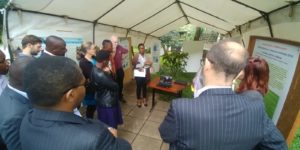 During the fourth International Learning Alliance workshop in Tanzania, members from SAIRLA research projects and National Learning Alliances were invited to share their lessons and experiences and share key findings and tools.
Two research projects and three NLAs presented on the theme of services under which the SAIRLA programme explores the services are needed to support SAI outcomes for smallholder farmers.
Here we summarise the presentations and highlight the key discussion points from the plenary that followed.
GALA: Integrating multi-media communication approaches and input brokerage
The research project ran a series of communication campaigns to raise awareness of sustainable legume practices and technologies using among other channels; radio, SMS, comics and radio listening groups. Project outcomes include:
- In Tanzania, as a result of the campaigns, farmers have increased their awareness and adoption of sustainable practices. The dissemination of GALA’s findings on the high use of Soya Njano by Tanzanian farmers resulted in the registration of the seed enabling it to be legally produced and sold in Tanzania.
- In Ghana, as a result of the video campaigns and the dissemination of GALA findings, the government recognised inoculants for soybean among the pool of inputs to subsidise.
Malawi NLA: Co-Learning for a Functional District Agricultural Extension Services System in Malawi
The Malawi Agricultural Extension Policy (2000), envisions that “all farmers are able to demand and access high quality extension services” through a pluralistic and decentralised extension system. The Malawi NLA is planning to conduct an action-research based study aimed at generating evidence of processes influencing the District Agricultural Extension Services System (DAESS).
Ethiopia NLA: ICT for Agricultural Extension in Ethiopia
The Ethiopia NLA organised a national level stakeholder dialogue on ICT for extension market place, held in collaboration with the Ministry of Agriculture (MoA) and other partners. SAIRLA research by Bioversity International and its local partners on an ICT approach was used as an entry to scale up to a national level. Over 90 senior experts, decision makers, researcher and investors attended. A technical working group to support the MoA’s Extension Directorate has been set up.
SRMS: Smallholder risk management solutions in Malawi and Ethiopia
The research project focuses on increasing smallholders’ access to inputs and participation in the development of commercial value chains in Ethiopia (teff) and Malawi (pigeon pea).
The project introduced their replicable business model – a continuous loop which begins with providing certified seeds to farmers and moves towards farmers returning two per cent of their harvest to a co-operative who in turn sells the harvest and use the profits for more certified seeds which are again, distributed to farmers. The researchers found that instead of money being put back into buying more certified seed, the profits were spent on food consumption instead – for example, in Ethiopia, farmers were exchanging teff with Sorghum which they could feed their families on easily and cheaply.
Ghana NLA: Multi-stakeholder social learning around the Fall Armyworm (FAW) menace in Ghana
In 2016, the Ghana NLA played a key role in the sensitisation and dissemination of evidence towards dealing with the devastating outbreak of Fall Army Worm. Through evidence sharing and social learning processes, the NLA contributed to a shift in the focus of decisions makers and other stakeholders from over-reliance on conventional synthetic pesticides to bio-rational pesticides. Activities included social learning field visits, information and evidence sharing workshops, and one-to-one engagement with decision makers. Social and print media were also used including WhatsApp, videos and newspaper articles. Key messages included:
- Middle-level policy decisions stands to benefit from FAW information sharing and learning using multi-stakeholder groups.
- Partnerships among stakeholders have provide to be the strength in the management of FAW in Ghana.
- Consideration should be given to the institutionalization of multi-stakeholder groups such as the NLA in finding solutions to problems in agriculture.
SAI means farmers need continuous access to information that his highly context-specific. The project has co-created ‘Ushauri’, a digital information service for SAI together with extension services and farmers in Tanzania and Kenya. An automated hotline provides access to a series of pre-recorded audio messages about kitchen garden horticulture (Kenya) or Aflatoxin control in the groundnut value chain (Tanzania). Farmers can also record further questions through their phones which appear on an online dashboard. Agricultural advisors record replies and send as automated replies. Key insights include:
- For farmers, the possibility to ask questions anytime as more important than the access to pre-recorded advice.
- User attrition due to lack of airtime was strong. Business models around advertisement could make the service toll-free.
‘Ushauri’ generates useful insights about farmers’ knowledge and information needs, which can be used to improve the service as well as general extension programming
During the plenary, participants were asked two questions:
- What is your main observation regarding services in relation to SAI in Sub-Saharan Africa?
- What is your main observation regarding policy and investment processes in relation to SAI in Sub-Saharan Africa?
The post ILA 2019: What processes can improve smallholder farmers’ access to services for SAI? appeared first on SAIRLA.
]]>The post ILA 2019: How are issues of equity being considered in relation to sustainable agricultural intensification? appeared first on SAIRLA.
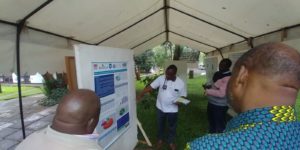
]]>
During the fourth International Learning Alliance workshop in Tanzania, members from SAIRLA research projects and National Learning Alliances were invited to share their lessons and experiences and share key findings and tools.
Two research projects and two NLAs presented on the theme of equity under which the SAIRLA programme explores why and how issues of equity should be considered in relation to sustainable agricultural intensification and the implications of different agricultural development pathways for marginalized farmers – in particular, women and young people.
Here we summarise the presentations and highlight the key discussion points from the plenary that followed.
AFRINT IV: Policy for Equity in African Agriculture
The overarching aim of AFRINT IV is to analyse patterns of SAI in Malawi, Tanzania and Zambia with particular attention to gender and youth and ways in which rural institutions can be enabled and incentivised to improve equity.
Research highlights include:
- In Zambia yields have increased for both male and female-headed households but there is a sizable gender gap.
- There is no gap based on age group in Zambia, so youth have benefited equally from the intensification process. In Tanzania yields among youth have fallen and in Malawi they have been unchanged.
- Limited possibilities for access to land is a major constraints for young people living in households headed by older relatives
- Women are constrained by lacking mobility, restrictive social norms, labour and capital.
IITA: Tools for Evidence and Decision-making on Gender-SAI Interactions
SAI interventions require farmers to make changes in their agricultural practices. These practices are embedded in broader gender roles and relations (including intersections with youth). IITA’s tools for evidence and decision making for gender-SAI interactions are grounded in participatory action and learning principles. The decision-making tool guide includes an introduction on SAI, gender and youth analysis tools, contextualisation and tools for making the decisions such as SWOT Analysis and T-Charts.
In a move to transform agriculture, the Government of Tanzania implemented the CAADP, allocating 10 per cent of the national budget to agriculture. Tanzania NLA have been analysing budget allocation and expenditures on agriculture and presented the findings from the Kilolo District Council, Tanzania. The aim is to inform stakeholders about district spending priorities, budget performance and challenges.
Among other things, they conclude that the government should issue guidelines for managing a special development fund for youth, review financial policies and laws to enable LGAs to collect resources and increase subventions to disadvantaged or resource poor LGAs.
Malawi NLA: Facilitating Dialogue on Issues around the New (2016) Customary Land Act in Malawi
Following consultations at the community, district and national level, the Malawi NLA has been facilitating dialogue on issues around the new (2016) Customary Land Act in Malawi. During these discussions, the NLA found that people are aware of the law but still need further information and knowledge in order to make informed decisions. Although the law is perceived by people generally to be a ‘good idea’, the NLAs have identified a number of ‘sticky’ issues which need to be address if the Land Act is to work, these include:
- The wider implications of land registration and concerns of the creation of land markets where land is traditionally believed to be a gift of nature that should not be regarded as individual property or sold out.
- That the law is now sensitive to culture or traditions – that the government should respect how land is owned along matrilineal and patrilineal lines.
- Payment fees for registration are considered unfair, particularly to poor people.
During the plenary, participants were asked two questions:
- What is your main observation regarding equity in relation to SAI in sub-Saharan Africa
- What is your main observation on how to engage policy and investment processes on equity?
The post ILA 2019: How are issues of equity being considered in relation to sustainable agricultural intensification? appeared first on SAIRLA.
]]>The post Turning knowledge into power for Ethiopia’s farmers appeared first on SAIRLA.
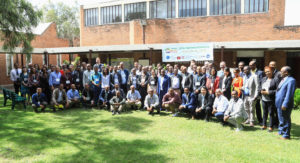
]]>
Effective agricultural extension and advisory services are key to enabling sustainable agricultural intensification (SAI). Ethiopia is one among few African countries where the government invests significantly in its extension system. For example, the National Extension Strategy, in its second pillar, identifies the importance of including ICT-led extension service delivery to enhance access to knowledge and information exchange and uptake among beneficiaries. As a result, over 17 million farmers are served by approximately 14,000 farmer training centres (FTCs) as well over 60,000 development agents nationwide. Yet despite this huge investment, there are still major capacity issues at extension and farmer levels.
Cognizant of this challenge, Makelle University, supported by SAIRLA, is developing an approach which uses ICT applications in advisory services on sustainable agricultural intensification (SAI) to enable household specific targeting of advisory messages. Using this research as an entry point, the Ethiopian National Learning Alliance (NLA) began to engage various actors in the agricultural sector with an interest in using ICT in the provision of agricultural support services to: identify existing tools and services; to avoid duplication of efforts and to develop solutions that will have a positive impact on smallholder farmers. One of the subsequent observations they made was a lack of understanding on who is doing what with regards to using ICT in the provision of agricultural support services in the country.
To help address this, the NLA co-hosted “Stakeholders dialogue and marketplace on “” in partnership with the MoA-Directorate of Extension, and , who had previously held similar discussions. The objectives of the event were to:
- Enhance stakeholders’ understanding about current and potential ICT demand and solutions for agricultural extension services in Ethiopia.
- Facilitate dialogue, joint learning, networking and collaboration around the use of ICT tools between ICT providers, users, policy makers and investors (taken forward through establishing a technical working group).
- Generate inputs for the National Agricultural Extension Strategy ICT pillar implementation guidelines
The event, held at the International Livestock Research Institute (ILRI) on 11 April 2019, attracted over 80 participants ranging from decision makers at the Ministry of Agriculture to donors such as Bill and Melinda Gates Foundation (BMGF) and the World Bank, national and international NGOs, national and international agricultural researchers, private ICT solution providers, and media agencies.
Key lessons from the event
Post event, the NLA were able to reflect on the following:
Institutional embedding helps raise legitimacy of externally facilitated social learning: This event was planned as one of the NLA meetings. The difference this time was that the NLA facilitation team was able to effectively embed the activity within the interests of the Ministry of Agriculture, Extension Directorate taking advantage of the favourable circumstance and the synergy of objectives. As a result, the event attracted a wider range of actors and senior decision makers with similar interests.
Timing is important: The event organising committee were aware of an upcoming BMGF-supported project to digitise Ethiopia’s advisory service and as a result, timed the event to inform BMGF investment and attract senior level BMGF decision makers. Informal discussions between the organising committee and BMGF officials indicated that the event improved their understanding of the range of ICT solution providers with the potential to contribute to their new initiative.
Social learning happens both at individual and organisational levels: One of the observations from the ‘before the event’ evaluation was that there were some individuals that had never met extensionists and some extensionists that had never met ICT providers. This kind of event helped participants from both sides of the fence to discover talents, become aware of existing solutions, engage and learn from each other and work together moving forward.
Change requires continuous engagement: One of the burning questions at the end of the workshop was, “Where do we go from here?” The answer is not an easy one. Further engagement requires a deliberate attempt to continue the joint work. The workshop participants gave the organising committee the responsibility to figure out how to sustain the engagement. The organising committee have since agreed to develop a terms of reference for a new working group to continue the stakeholder dialogue into the future. The event website will also be developed into an information hub on ICT for extension.
The post Turning knowledge into power for Ethiopia’s farmers appeared first on SAIRLA.
]]>The post A more flexible Farmer Input Subsidy Programme could contribute to more sustainable farming in Ghana appeared first on SAIRLA.
]]>The food crop famers said under the FISP being implemented by the Ministry of Food and Agriculture, (MOFA), under its Food Security and Emergency Preparedness Programme, prices, particularly of fertiliser was still high for them to buy. Consequently, they were not benefiting fully, although the programme was targeted at them.
They said if they are expected to improve productivity to ensure food security and enhance livelihoods, as well as improve the sector’s contribution to Gross Domestic Product (GDP), then the reason for introducing the subsidy should help their cause.
Farmers concerns, fertiliser
An interaction with some smallholder farmers in the Upper West Region under the auspices of the Ghana National Learning Alliance under the Sustainable Agricultural Intensification Research and Learning Africa (SAIRLA), showed they are aware of the FSIP and they mostly benefit from fertiliser under the three.
However, they complained about the prices, accessibility and timing of the release of the subsidised inputs which affects the amount they can afford.
At Ko in the Nandom District in the Upper West Region, most farmers produce crops such as cowpea, sorghum, millet, yam and groundnut. The Ko Naa, Naa Domepeeh Gyereh III, said due to the above stated issues, many farmers in the area may not want to use fertiliser at all.
“With inorganic manure, if you start using and at a point you stop applying it on your farm, you don’t get the same value in yields. So, most of us have gone into rearing of animals to enable us produce adequate compost / manure which we believe is able to maintain soil fertility over a longer term ,” he said during a visit to the area.
A farmer, who caters for a household of seven people, Mr Vitus Beweleyir, said he can afford some amount of fertiliser which he buys through the unit committee in the area which he uses alongside the compost he is able to produce.
“Well, it has been beneficial so far. In 2017, there was a delay in release but 2018, it came on time. I don’t use tractor services because I want to do minimum tillage, so the soil nutrients won’t be destroyed,” he explained.
Another farmer in the area, Mr Gregory Kelle, who cultivates about five acres farmland said he used his own produced compost more than the subsidised mineral fertiliser.
“If you apply the compost, it can maintain the soil nutrients for three years but if you use the mineral fertiliser and you don’t continue applying you won’t get same yield,” he stated.
Seed
The farmers are faced with the same challenge of affordability. Naa Gyereh III said local seeds, (which are selected out during harvesting) was preferred because they assume that fertiliser use and hybrid seed must go together.
At Kalsagri in the Lawra Municipal Assembly in the Upper West Region, the Regent, Baanye Kaara-ib, said farmers in his area registered for coupons that qualified them to receive fertiliser and pay in installments.
Seeds, he said arrived late and so most do not use.
Tractor
Another farmer, Denuru Kuukorah, said that most of the tractor services that flooded the area during the farming season were from the southern belt, particularly the Brong Ahafo Region which makes demand higher.
Therefore, due to non-accessibility and affordability, land preparation was still a challenge as the smallholder farmers are still dependent on the hoe and cutlass for farming.
Naa Gyereh III said animal ploughing was preferred since it was less costly, does not dig deeper and helps farmers to practice agroecology (the adaptation of agriculture to natural conditions and cycles and to local needs).
A 33-year-old farmer at Tanchara in the Lawra Municipal, who cultivates a four-acre farmland and heads a household of 12, said he benefited from the subsidised fertiliser.
“I use the fertiliser together with the manure I produce. I apply the manure before planting and fertiliser three weeks after planting because I believe the manure moisturises the soil,” he said.
Other concerns
Some stakeholders including the Peasant Farmers Association of Ghana (PFAG) have often asked for strict enforcement of the law against smuggling and punishment for persons caught trying to smuggle fertiliser outside the country.
The PFAG also advocate an extension of the fertiliser under the FISP to the dry season to cater for farmers on irrigation projects. Also, the limited nature of retail outlets, farmers say increase transport cost for those who live far away from the retailers.
MOFA and the budget
The basic idea for the FISP was to cushion smallholder farmers whose use of fertiliser would have been minimal or nil and so, the programme has focused on reducing the cost fertiliser to farmers to increase its use.
At its introduction in 2008, there was a 50 per cent subsidy component which declined to 21 per cent in 2015, representing a reduction of about 58 per cent.
In 2019, about 13,000mt of subsidised seeds for priority crops (cereals, legumes and vegetables), and 200,000 bundles of cassava planting materials; 438,900mt subsidised inorganic / mineral fertiliser and 30,000mt of organic fertilisers will be distributed.
It is estimated that the distribution of the subsidised inputs to the farmers will translate into a total of 1.2million mt of additional production of cereals and legumes.
In 2018, a total of 183,000mt of fertilisers, 7,600mt of seeds and cassava planting materials were distributed across the country.
Recommendation
The farmers have prevailed upon the government to live up to the objectives of the FISP to increase subsidies on marketing prices of fertilisers, seeds and other agrochemicals.
They said government support should also consider going into helping them produce their own compost and manure, especially, water sources and transporting of the compost to the farmland to apply.
The Deputy Director at the Nandom District Assembly, Mr William Safo, said since most of the challenges associated with the inputs was administrative; timing and pricing (women smallholders cannot afford), government should try to resolve it.
“They start preparing in May for June main season and so if inputs come in July, while rain pattern can’t be predicted, they sow late and which affect yield,” he said.
The Lawra Municipal Assistant Coordinating Director, Mr Cletus Chevure, said although they share in the responsibility to inform farmers about the existence of the input subsidy, extension services remained a setback, and so should be looked at.
The Deputy Executive Director of the Centre for Indigenous Knowledge and Organisational Development (CIKOD), focused on promoting sustainable agriculture, Mr Daniel Faabelangne Banuoku, corroborated the need for extension services to aide in fertiliser application to avoid under dose and over dose.
He recommended that the FISP be looked at to consider organic fertiliser under the programme.
“If we can try to rope in more local producers of compost into the scheme. Labour, water and transport make it difficult to produce compost so, if the system can look at that by helping farmers get compost as they get access to chemical fertiliser, it will be good,” he explained.
The General Agricultural Workers Union (GAWU), has maintained that subsidy was a prerequisite for food security and at the same time efforts must be made to help create ready market for agricultural products to prevent post-harvest losses.
Some studies have recommended that the programme needed a clearer strategy on how to target women.
the challenges associated with the inputs was administrative; timing and pricing (women smallholders cannot afford), government should try to resolve it.
“They start preparing in May for June main season and so if inputs come in July, while rain pattern can’t be predicted, they sow late and which affect yield,” he said.
The Lawra Municipal Assistant Coordinating Director, Mr Cletus Chevure, said although they share in the responsibility to inform farmers about the existence of the input subsidy, extension services remained a setback, and so should be looked at.
The Deputy Executive Director of the Centre for Indigenous Knowledge and Organisational Development (CIKOD), focused on promoting sustainable agriculture, Mr Daniel Faabelangne Banuoku, corroborated the need for extension services to aide in fertiliser application to avoid under dose and over dose.
He recommended that the FISP be looked at to consider organic fertiliser under the programme.
“If we can try to rope in more local producers of compost into the scheme. Labour, water and transport make it difficult to produce compost so, if the system can look at that by helping farmers get compost as they get access to chemical fertiliser, it will be good,” he explained.
The General Agricultural Workers Union (GAWU), has maintained that subsidy was a prerequisite for food security and at the same time efforts must be made to help create ready market for agricultural products to prevent post-harvest losses.
Some studies have recommended that the programme needed a clearer strategy on how to target women
This article was originally published on Graphic Business (https://www.graphicbusinessonline.com/agric/smallholder-farmers-want-more-subsidy-on-fertiliser) and is reproduced here with kind permission.
The post A more flexible Farmer Input Subsidy Programme could contribute to more sustainable farming in Ghana appeared first on SAIRLA.
]]>The post Learning from the most successful farmers: How can SAI be achieved in Southern Tanzania despite trade-offs? appeared first on SAIRLA.
]]>Steinke et al. (2019): Prioritizing options for multi-objective agricultural development through the Positive Deviance approach. PLoS ONE 14(2): e0212926.

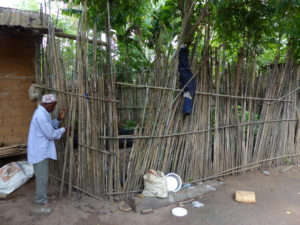
The wired door gives a soft groan as Mariam Ally enters her brickwork chicken coop in the village of Mchengamoto, to present her invention. Like many smallholder farmers in the Tunduru district of Tanzania, not far from the Mozambican border, the 33-year-old lady makes some money by selling poultry to the traders who pass her village. But unlike other farmers, Ms. Ally had a unique idea to make the most of her small-scale production: Having discovered that artificial light keeps the chickens active beyond sunset, she installed a small solar panel to the coop’s roof. A light bulb now extends the light of day for the chicken, causing them to eat more and fatten more quickly. The increased sales soon repaid her initial investment.
Mariam Ally is a “positive deviant”, part of , which investigated innovative farm-related behaviours in Tanzania. The study addressed a challenge faced by agricultural development organisations around the world: Which practices should be promoted to local farmers to support sustainable development? Often, promising innovations “imported” from other places see only weak adoption, and can have unexpected downsides in new target context.
Positive deviants: Some farmers get more out of their farms than others
The Positive Deviance approach takes a different perspective: Working with particularly innovative individuals, researchers can directly identify practices that contribute to intensified production under local constraints and opportunities. The concept, , is simple:
The grass isn’t always greener on the other side. And yet, somebody in the village has the greenest grass, despite facing the same challenges as others. So what can be learnt from that high performer?
In all rural communities, there are some farmers who are creative and apply innovative practices, leading to better outcomes. These practices, just like Ms. Ally’s solar coop lamp, could be smart options for other local farmers, too. In practice, however, researchers cannot detect innovative practice directly, as this would require large-scale surveillance. More easily, research can quantify the performance of many rural households and then identify the outliers – farmers whose performance seems to stick out from the crowd. With these individuals, there is a high chance to observe locally viable, innovative practice.
Agricultural development must address multiple concurrent objectives
In the new SAIRLA-funded study, researchers used in Southern Tanzania to identify households with outstanding performance. Then, they re-visited some of these positive deviants for extensive farm observations and interviews, to identify uncommon, innovative behaviours.
But the complex reality of smallholder agriculture precludes too straightforward analysis: Farming is a whole way of life, involving . If Positive Deviance focuses narrowly on the most productive households, it might lead to practices with adverse implications, for example, for household income or the environment.
To achieve , households must deal successfully with inevitable trade-offs, for example, between productivity and diversity, or between productivity and environmental stewardship.
Thus, the recent study defined positive deviants by exceptionally strong “overall” performance in five key dimensions: Food security – Income – Nutrition – Environmental sustainability – Social equity. For each household in the survey, there were five performance indicators. These included, for example, annual household income, a dietary diversity score (for Nutrition), and a measure of gender equity (for Social equity).
Visits to diverse positive deviants identified a range of locally viable SAI practices
But does this approach not risk simply identifying the wealthiest farmers, with largest farms or best market access, as positive deviants?
By accounting for individual household resources, the researchers put the performance indicators into perspective: Every household’s performance was assessed against the “expected” performance, given their land and livestock holdings, family size, region, and market potential. As a result, the selection criterion for being a positive deviant was performing “better than expected” – which may include any farm size, at any place. The study then identified positive deviants by . That is, households qualified as positive deviants if they achieved stronger outcomes than other households with equivalent resource levels, balancing the five concurrent development objectives.
Mariam Ally, the soft-spoken, but entrepreneurial farmer from Mchengamoto, was but one of 15 rural household leaders visited by the research team. All in all, in ten days of fieldwork, the interviews and farm visits revealed a list of 14 interesting practices that plausibly contributed to Sustainable Intensification. Positive deviants engaged in a large diversity of practices: From agronomic improvements, such as cereal-pulse intercropping, to on-farm businesses, such as a tree nursery, to off-farm enterprises, such as a private transport business or classic wage labour.
In their study, , published in PLoS ONE, the authors draw three main conclusions:
- Positive deviants were diverse with respect to resource endowments and livelihood activities. Exploring the behaviours of these heterogeneous positive deviants can inform an ample range of locally viable household-level practices that support Sustainable Agricultural Intensification in diverse contexts.
- Identifying such locally viable practices for SAI does not require complex econometric modelling nor extensive qualitative fieldwork. Rather, a resource-efficient combination of quantitative and qualitative research methods makes the Positive Deviance approach accessible for local development agencies.
- The performance differences between positive deviants and other households can indicate most-promising domains for development interventions. In the case of Southern Tanzania, the study suggests highest potential for improvements in food security and income. Improvements in nutrition and social equity, for example, seem harder to achieve without repercussions for other dimensions.
The post Learning from the most successful farmers: How can SAI be achieved in Southern Tanzania despite trade-offs? appeared first on SAIRLA.
]]>